
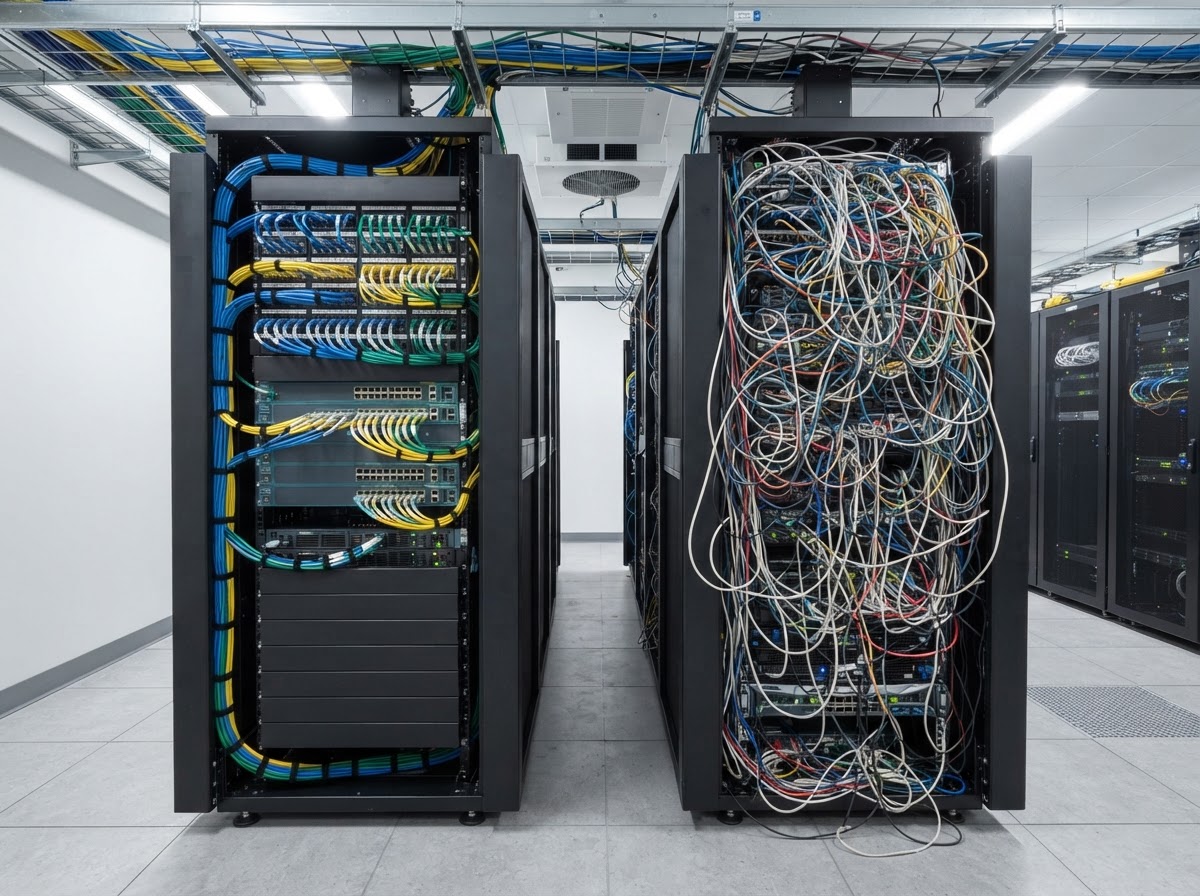
Compare structured cabling and point-to-point wiring on organization, maintenance, scalability, and planning to choose the right approach.
Key Takeaways
- Structured cabling plans pathways up front; point-to-point wiring adds cables one device at a time.
- Structured cabling is labeled and documented, making troubleshooting far faster.
- Point-to-point wiring tends to become tangled and hard to trace over time.
- Structured cabling scales more easily when you add cameras, readers, or smart devices.
- A consultation helps determine which approach fits your property and goals.

Table of Contents
- 1.What Is Point-to-Point Wiring
- 2.What Structured Cabling Does Differently
- 3.Comparing Organization and Maintenance
- 4.Comparing Scalability and Future Expansion
- 5.Choosing the Right Approach
- 6.Frequently Asked Questions
What Is Point-to-Point Wiring
Point-to-point wiring is the practice of running a dedicated cable directly from one device to another whenever a new piece of equipment is added. Each camera, reader, speaker, or smart device gets its own run, added as needed rather than planned together.
This approach works in the short term, but it tends to accumulate over time. Cables multiply, routing becomes improvised, and there is often no documentation of what connects where. The result is a tangle that is hard to trace and harder to expand cleanly.
What Structured Cabling Does Differently
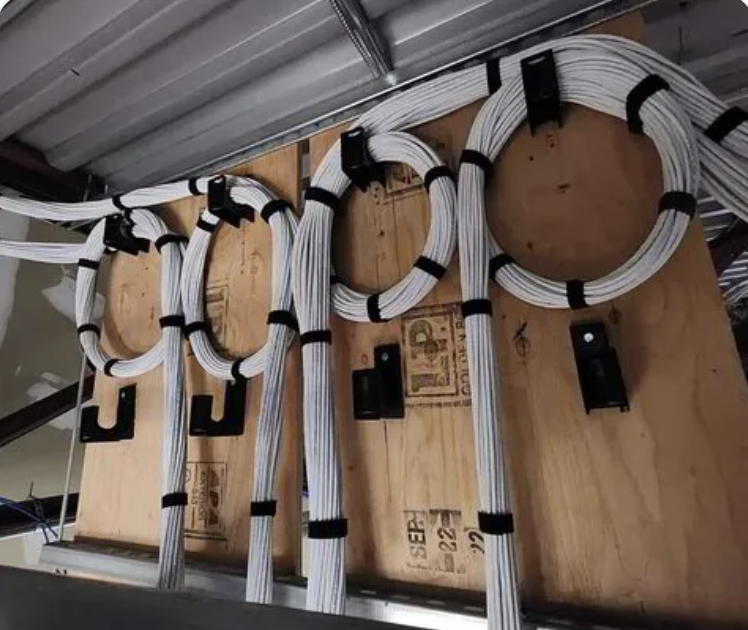
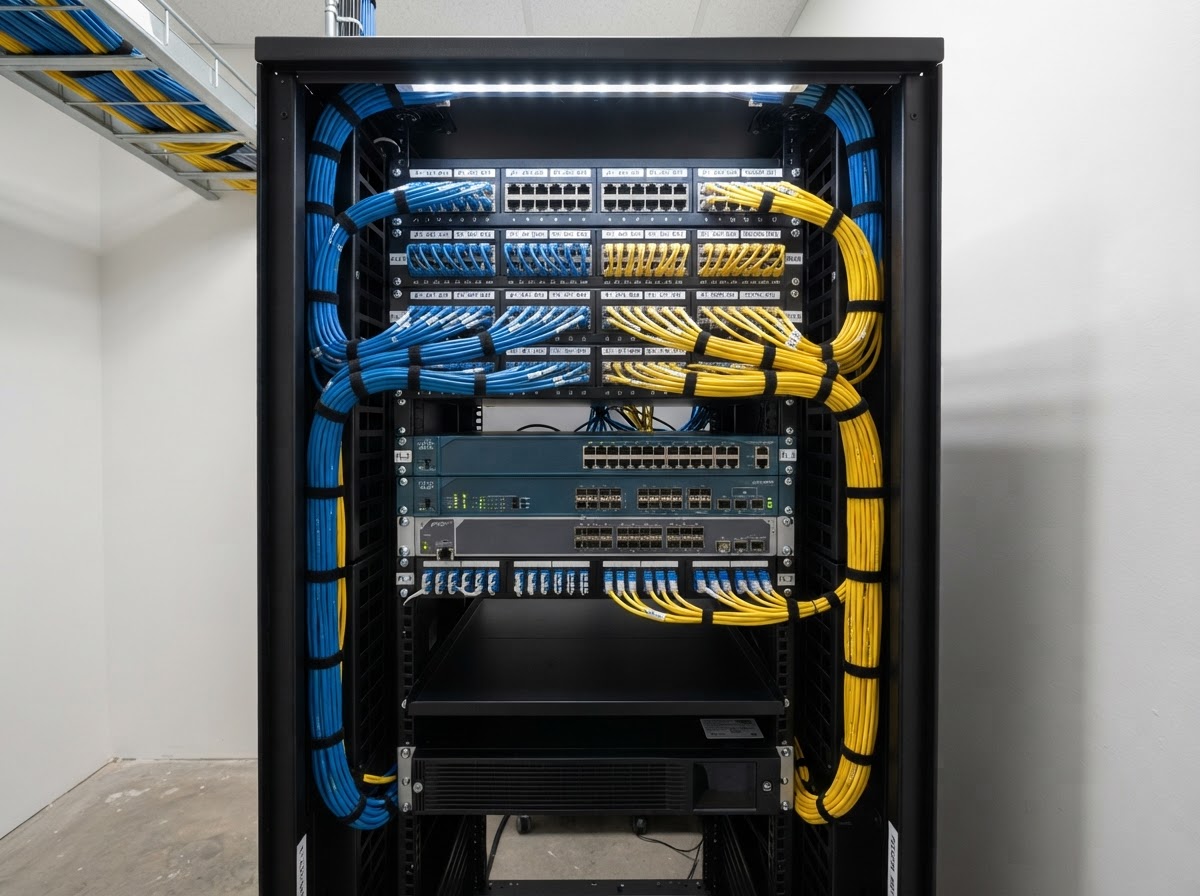
Structured cabling plans the pathways, terminations, and connections up front so every system shares a tidy, documented infrastructure. Instead of adding cables reactively, the installation is designed around the devices you have and the technology you plan to add.
Connections are labeled and organized, so tracing a line or adding a device is straightforward. The finished installation looks intentional and stays manageable as the property's technology grows.
Comparing Organization and Maintenance
Organization is the biggest difference. Structured cabling is labeled and routed through planned pathways, so a technician can identify and trace any connection quickly. Point-to-point wiring, by contrast, often requires following an unlabeled cable through an improvised route to find where it goes.
That difference matters when something stops working. With documented cabling, troubleshooting is faster and less disruptive. With tangled point-to-point runs, diagnosing a problem can mean disturbing finished walls or guessing at connections.
Comparing Scalability and Future Expansion
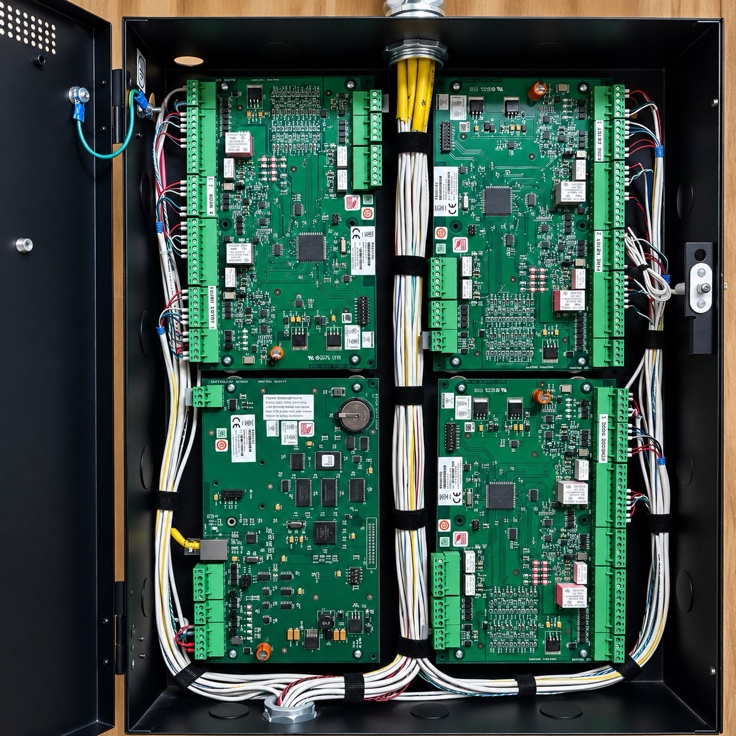
Structured cabling is designed to grow. Because pathways are planned and documented, adding a [[security camera|/services/security-camera-installation]], an [[access control|/services/access-control-systems]] reader, or a new [[audio|/services/audio-video-solutions]] zone is a matter of extending an existing infrastructure rather than starting over.
Point-to-point wiring scales poorly. Each new device adds another improvised run, and the tangle grows. Over time, the lack of planning makes upgrades more expensive and more disruptive than they need to be.
Choosing the Right Approach
For a single device added once, point-to-point wiring may seem simpler. But for any property running multiple connected systems—cameras, readers, speakers, displays, and [[smart-home|/services/home-automation-smart-home]] devices—structured cabling is the more reliable, more maintainable, and more scalable choice.
V Power Solutions designs structured cabling around your property and goals. A consultation identifies which systems you have, which you plan to add, and how to plan pathways that support both.
Deciding between structured cabling and point-to-point wiring? V Power Solutions can assess your property and recommend the infrastructure approach that fits your systems and goals.
Request a Free ConsultationFrequently Asked Questions
Q.What is the main difference between structured cabling and point-to-point wiring?+
Q.Is structured cabling easier to maintain?+
Q.Which approach scales better?+
Q.Can point-to-point wiring be replaced with structured cabling?+
Q.Which approach is better for businesses?+
Q.How do I decide which approach fits my property?+
Related Services
Related Articles

Protect and Connect Your Property
Request a free consultation with V Power Solutions. Call us, message on WhatsApp, or complete the contact form.
This article is for general informational purposes only and does not constitute professional advice. Product availability, features, and specifications may change. Contact V Power Solutions for current information about your specific project.


