
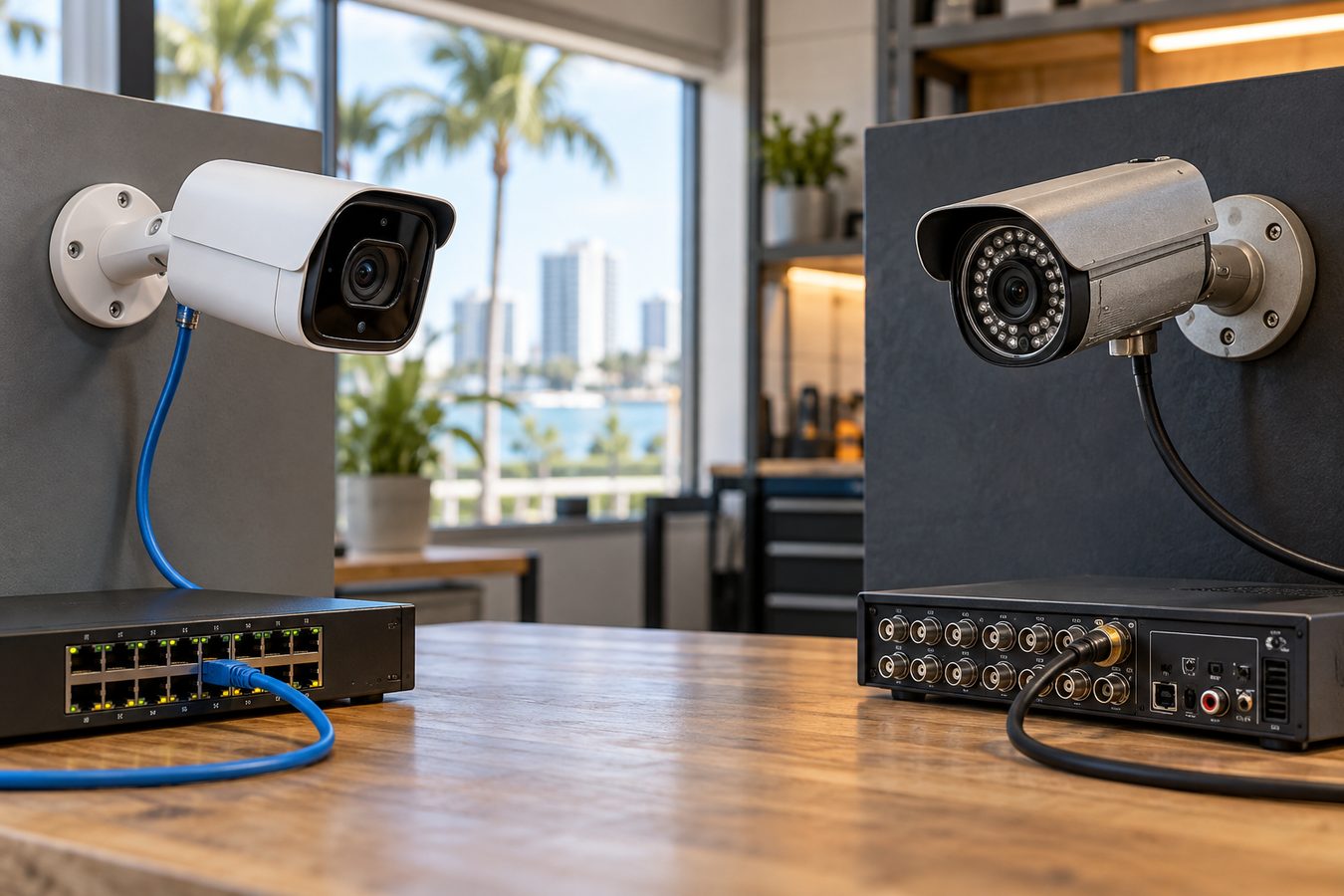
Compare IP and analog camera systems on image quality, wiring, remote access, cost, and scalability to decide which fits your property and budget.
Key Takeaways
- IP cameras offer higher resolution, remote access, and easier scalability than analog CCTV.
- Analog systems can cost less upfront but have lower image quality and limited features.
- PoE wiring simplifies IP camera installation by combining power and data in one cable.
- For most Florida properties today, IP cameras are the recommended choice.
- A consultation helps you weigh image quality, budget, and future expansion needs.

Table of Contents
- 1.The Core Difference Between IP and Analog
- 2.Image Quality and Resolution
- 3.Wiring and Installation Complexity
- 4.Remote Access and Smart Features
- 5.Cost and Scalability Comparison
- 6.Which Should You Choose?
- 7.Frequently Asked Questions
The Core Difference Between IP and Analog
The fundamental difference is how each system transmits video. Analog CCTV cameras send a continuous video signal over coaxial cable to a digital video recorder (DVR), which digitizes and stores it. IP cameras are network devices that send digital video data over your network to a network video recorder (NVR) or cloud storage.
This difference affects everything downstream: image quality, wiring, remote access, scalability, and price. Understanding these trade-offs helps you choose the system that fits your property and goals.
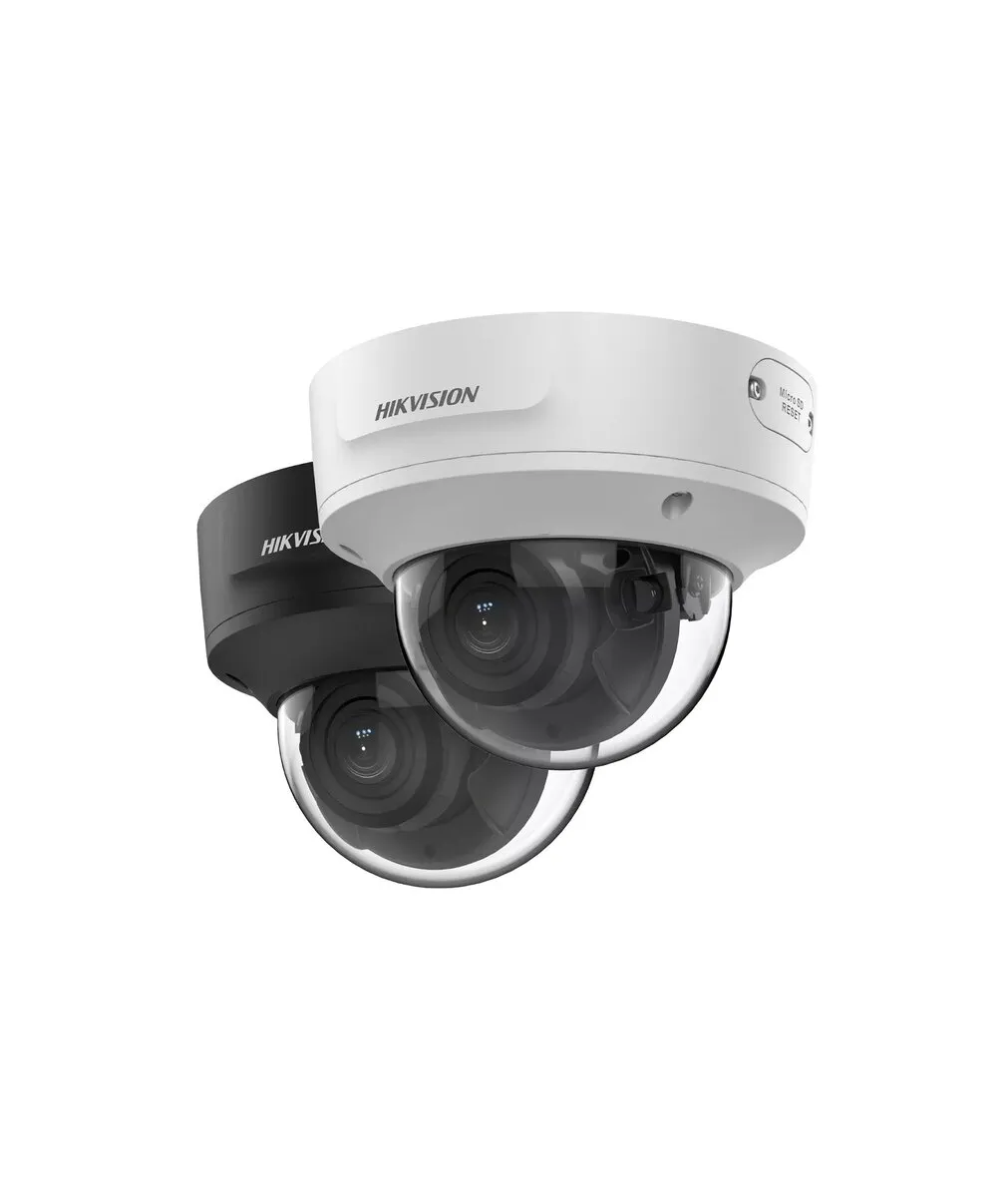
Image Quality and Resolution
Image quality is where IP cameras pull ahead. Analog cameras typically cap at 1080p, and older systems are even lower. IP cameras commonly offer 2K and 4K resolution, which means you can zoom into recorded footage and still read license plates or identify faces at a distance.
For Florida businesses that may need footage for evidence or insurance claims, higher resolution matters. A blurry analog image may not be usable, while a 4K IP recording provides clear detail. For homes, the difference shows up when checking who is at the door or reviewing a delivery.
Wiring and Installation Complexity
Analog cameras use coaxial cable plus a separate power cable, meaning two runs per camera. IP cameras can use Power over Ethernet (PoE), which delivers both power and data through a single Ethernet cable. This simplifies installation, reduces cable bulk, and makes future expansion easier.
For properties being pre-wired during construction, PoE is especially convenient. For retrofits, V Power Solutions plans cable routes that minimize visible wiring and protect connections from Florida weather.
Remote Access and Smart Features
IP camera systems are built for remote access. A mobile app shows live feeds, recorded clips, and push alerts from anywhere. Many support two-way audio, smart motion detection that distinguishes people from animals or vehicles, and integration with smart-home platforms like [[home automation|/services/home-automation-smart-home]].
Analog systems can add remote access through a networked DVR, but the experience is more limited and the smart features are minimal. If remote monitoring and alerts are important to you, IP is the clear choice and pairs naturally with [[burglar alarms|/services/security-alarm-installation]] and [[access control|/services/access-control-systems]].
Cost and Scalability Comparison
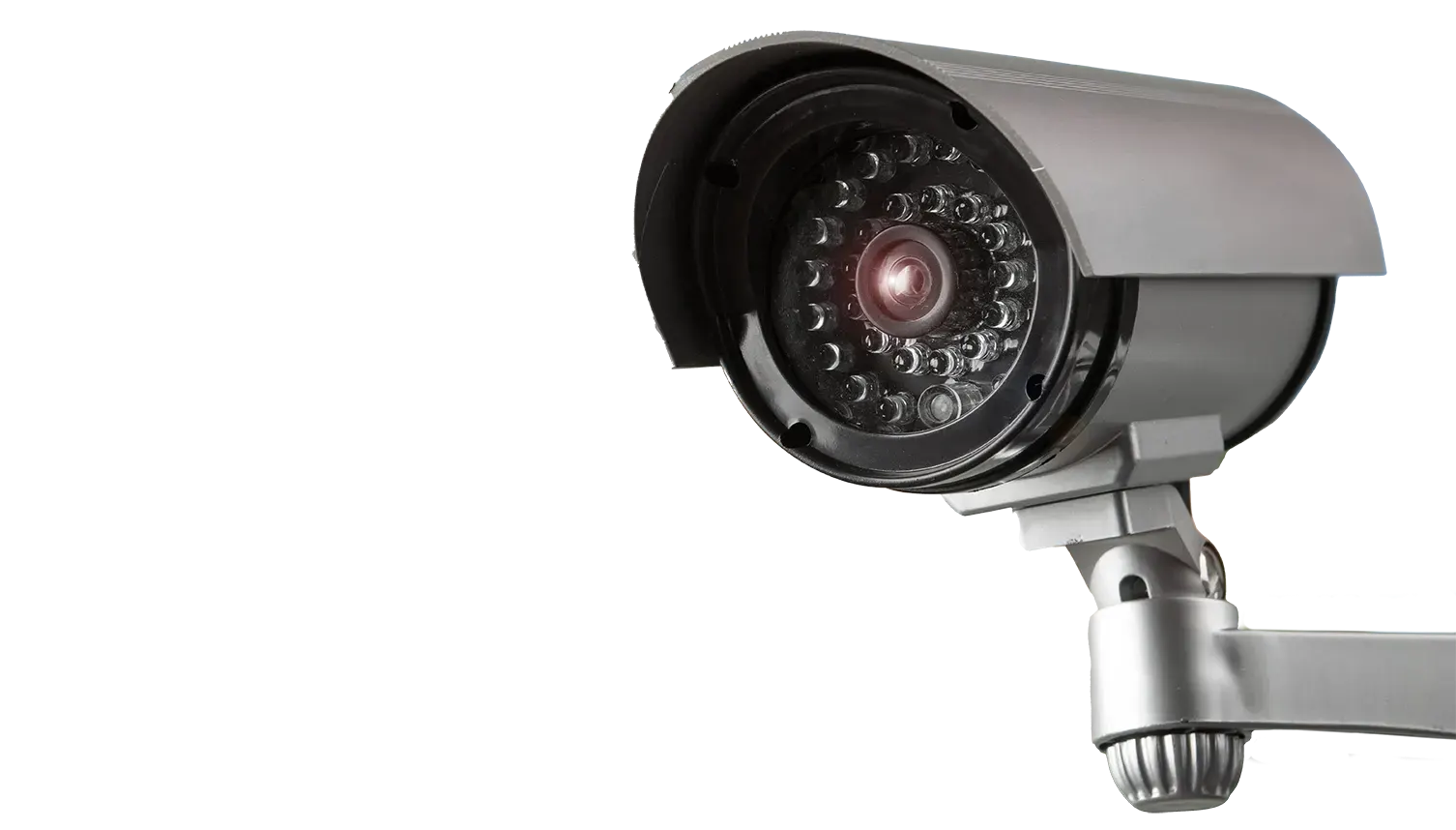
Analog systems can have a lower upfront equipment cost, which appeals to tight budgets. However, the gap has narrowed as IP camera prices have dropped. When you factor in image quality, features, and longevity, IP systems often deliver better value over time.
Scalability strongly favors IP. Adding cameras to an IP system is straightforward—run a cable and add the camera to the NVR. Analog systems require more rewiring and have channel limits on the DVR. For a property that may grow, IP is more future-proof.
Which Should You Choose?
For most Florida homes and businesses today, IP cameras are the recommended choice. They offer better image quality, easier wiring with PoE, full remote access, and room to grow. Analog systems remain an option for very budget-constrained projects where basic coverage is enough.
The best way to decide is a consultation. V Power Solutions assesses your property, discusses your goals, and recommends the system that fits your needs and budget—whether that is a 4-camera IP setup for a home or a multi-camera commercial array.
Deciding between IP and analog cameras? V Power Solutions can assess your property and recommend the right system for your coverage and budget.
Request a Free ConsultationFrequently Asked Questions
Q.Are IP cameras better than analog?+
Q.What is PoE and why does it matter?+
Q.Can I upgrade an analog system to IP?+
Q.Do IP cameras cost more than analog?+
Q.Which system is better for a business?+
Related Services
Related Articles
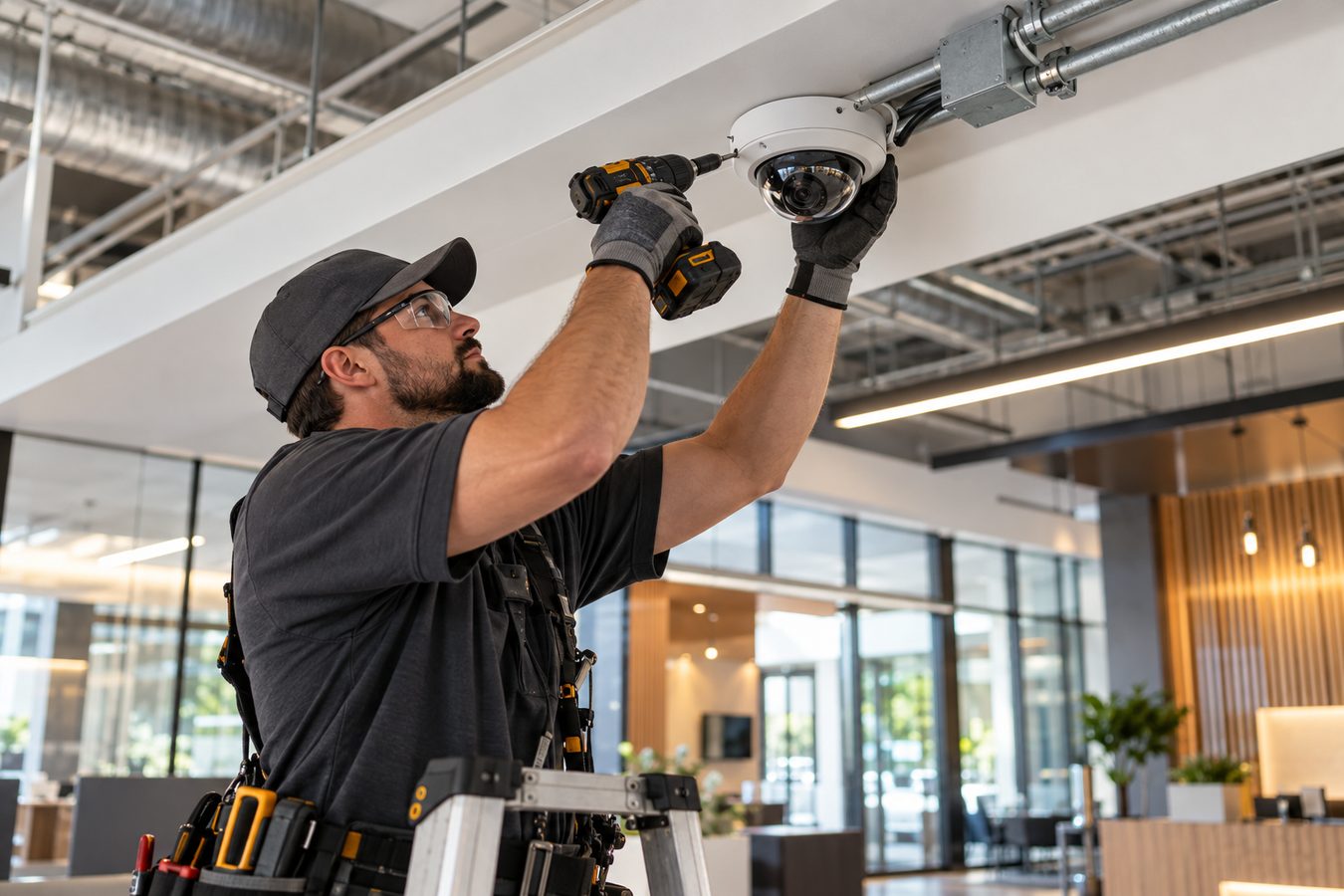
Security Camera Installation
What Is Security Camera Installation? A Complete Guide for Florida Homes and Businesses
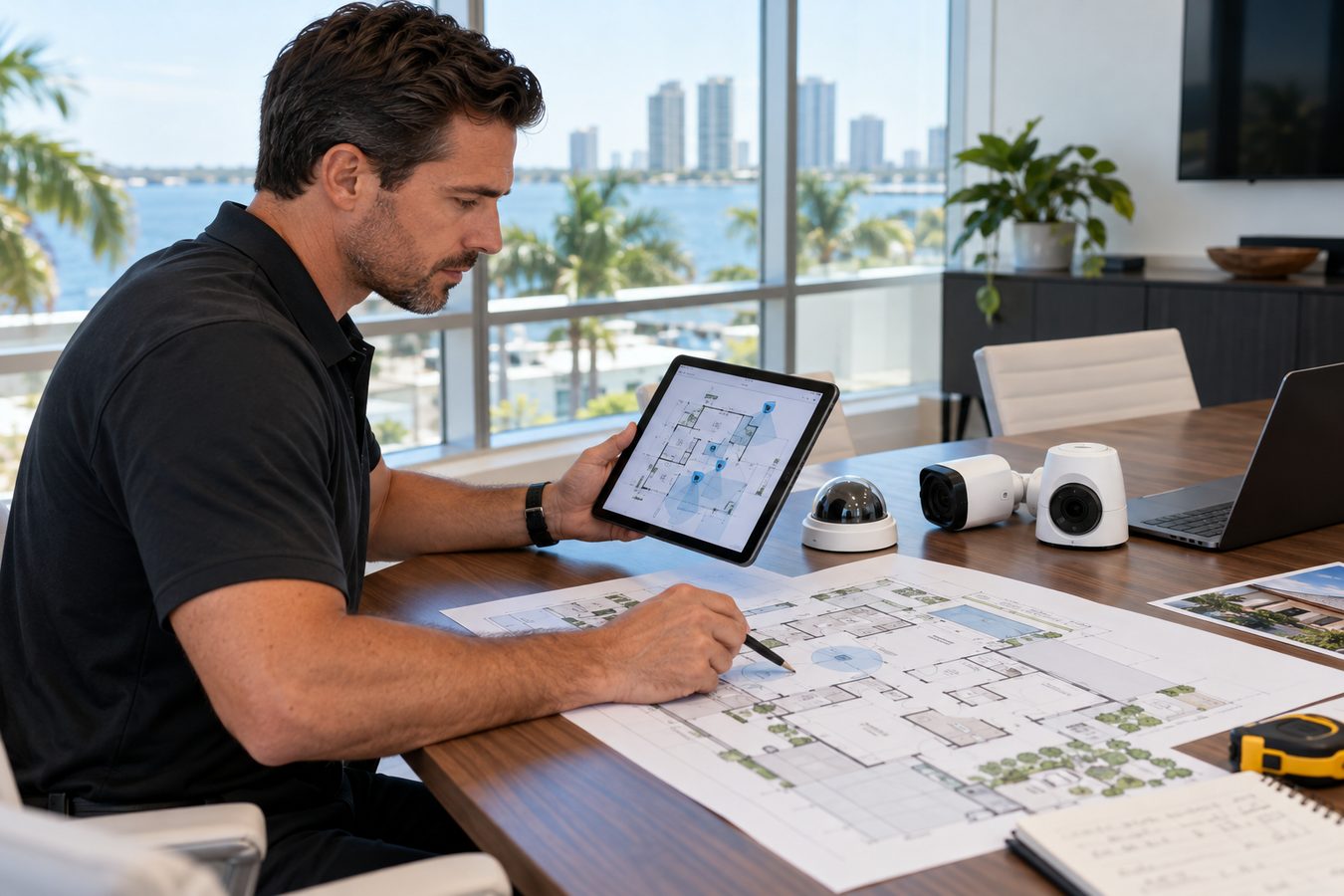
Security Camera Installation
How to Plan a Security Camera Layout: Placement, Coverage, and Maintenance Guide
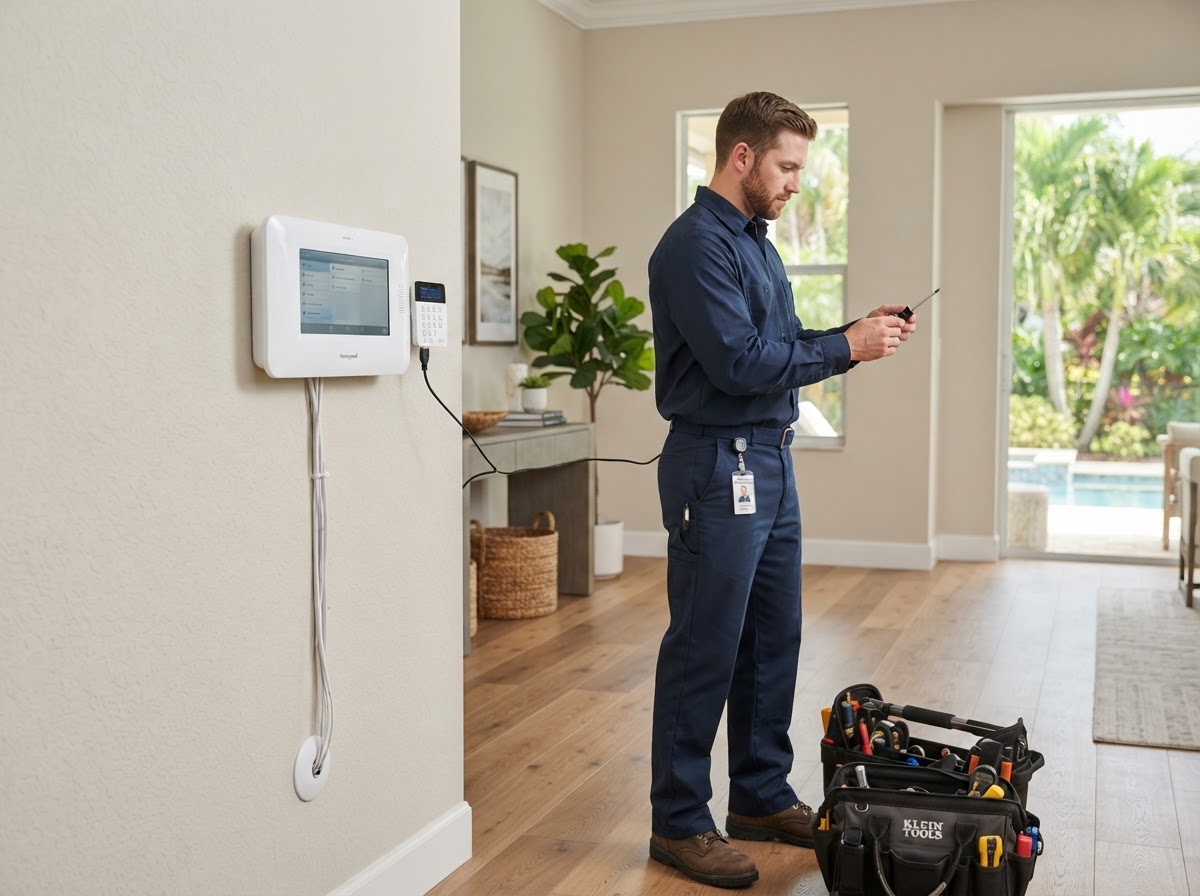
Burglar Alarm Installation
What Is Professional Burglar Alarm Installation? A Guide for Florida Properties
Protect and Connect Your Property
Request a free consultation with V Power Solutions. Call us, message on WhatsApp, or complete the contact form.
This article is for general informational purposes only and does not constitute professional advice. Product availability, features, and specifications may change. Contact V Power Solutions for current information about your specific project.


