
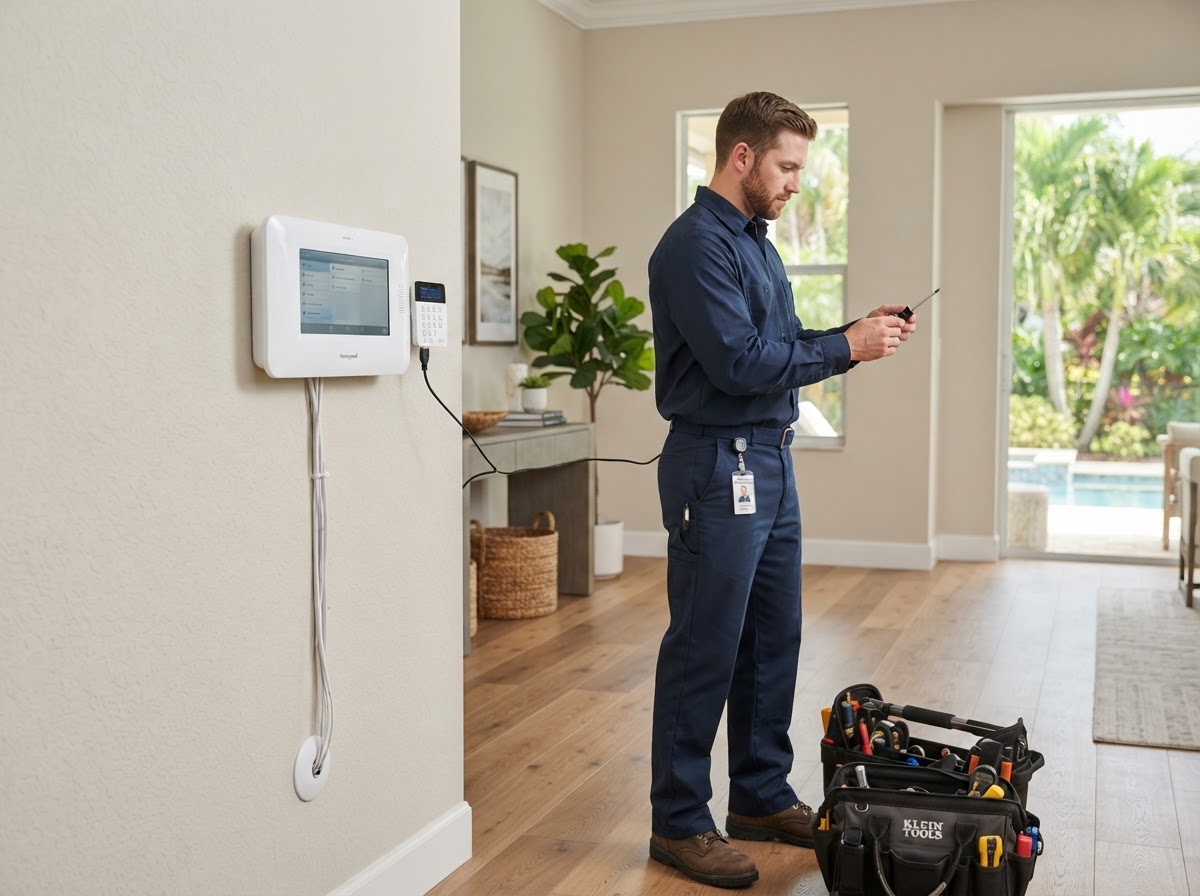
Understand what a professional alarm installation includes, the components involved, how alerts work, and why professional setup outperforms DIY kits.
Key Takeaways
- A professional alarm installation includes sensors, a control panel, keypad, siren, and mobile alerts.
- Systems are customized to your property's entry points and daily routine.
- Professional setup ensures correct sensor placement, reliable connectivity, and proper testing.
- Both homes and businesses benefit from immediate breach detection and deterrence.
- Ongoing support keeps the system reliable as your needs change.

Table of Contents
- 1.What a Security Alarm Installation Includes
- 2.The Core Components of an Alarm System
- 3.How Alarm Alerts Reach You
- 4.Residential and Commercial Applications
- 5.Professional Installation vs DIY Kits
- 6.Frequently Asked Questions
What a Security Alarm Installation Includes
A professional security alarm installation is the design, placement, wiring, configuration, and testing of an intrusion-detection system. It is not just sticking sensors on doors. The process covers selecting the right sensors for each entry point, planning zones around how you use the property, installing the control panel and keypad, configuring alerts, and testing every component.
V Power Solutions starts with a consultation to understand your property layout, daily routine, and security concerns. The result is a system that detects a breach quickly, alerts you or a monitoring service, and deters intruders with a siren—all while fitting naturally into how you live or work.
The Core Components of an Alarm System
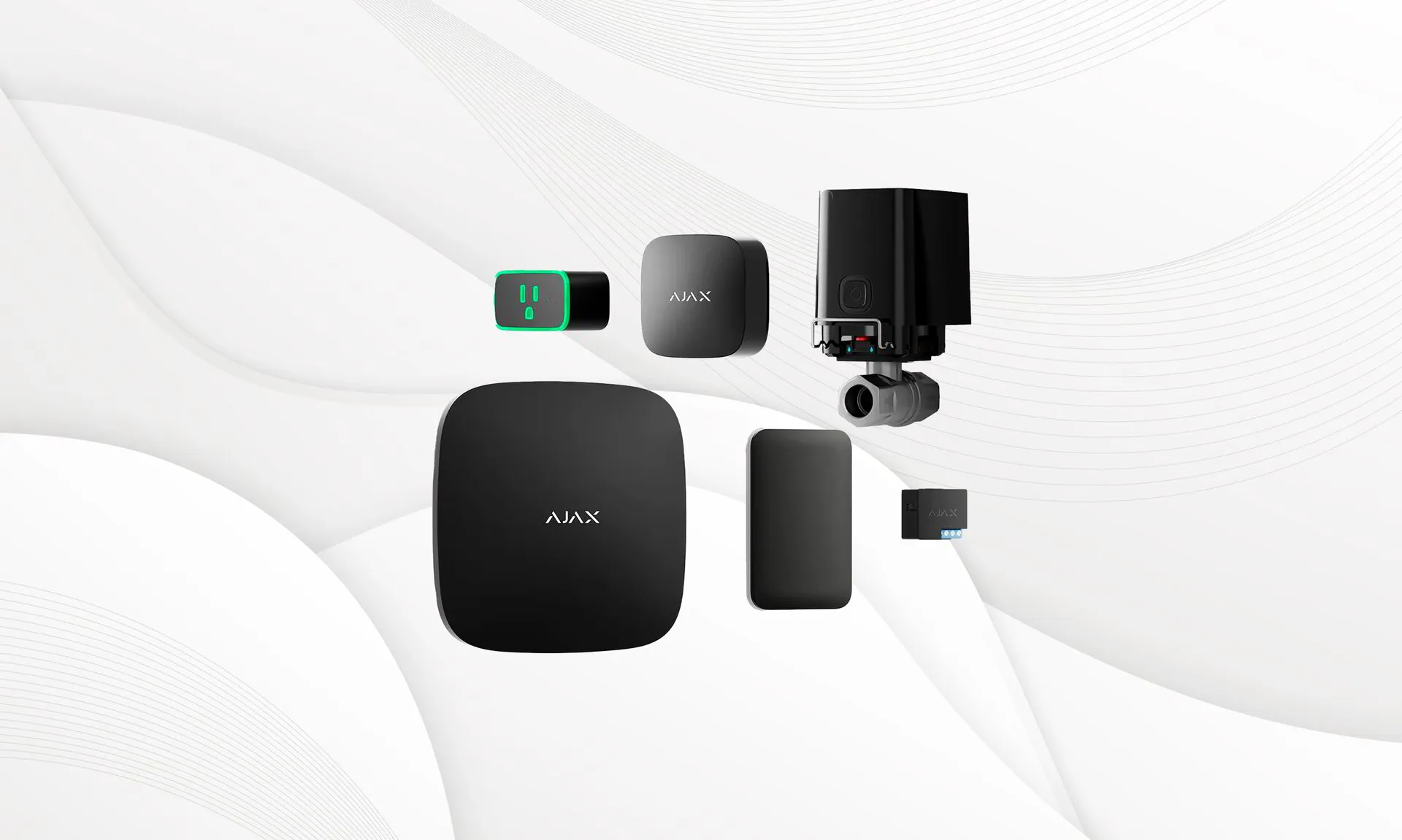
A complete alarm system is built from several components working together. Understanding these helps you discuss options during your consultation.
- Door and window contact sensors that trigger when opened
- Motion detectors for interior spaces and hallways
- Glass-break sensors for windows and large glass doors
- A control panel that processes signals and manages zones
- A keypad for arming, disarming, and entering codes
- A siren or sounder that deters intruders
- A communicator that sends alerts to your phone or monitoring
How Alarm Alerts Reach You
When a sensor triggers, the control panel activates the siren and sends an alert. In a self-monitored setup, that alert goes to your smartphone as a push notification, text, or call. In a professionally monitored setup, the signal also goes to a monitoring center that can verify and dispatch help.
Modern systems let you choose how you are notified and can send different alerts for different events—a door opening while disarmed versus an actual alarm trigger. This flexibility is configured during installation based on your preferences.
Residential and Commercial Applications
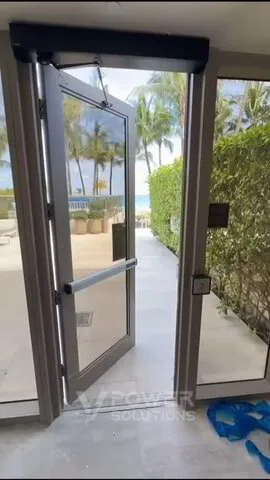
For homes, an alarm system protects entry points and interior spaces, giving families confidence whether they are home or away. Common setups include door and window sensors, a motion detector in the main hallway, and a keypad near the primary entry.
For businesses, alarm systems often cover more zones—front and back entrances, stockrooms, offices, and cash-handling areas. Businesses may also use scheduled arming, multiple user codes, and integration with access control to track who armed or disarmed the system and when.
Professional Installation vs DIY Kits
DIY alarm kits are widely available, but they come with trade-offs. Sensor placement is often guesswork, wireless range can be unreliable in larger homes, and there is no professional testing or support. When a sensor fails or the system behaves unexpectedly, you are on your own.
Professional installation removes the guesswork. V Power Solutions places sensors where they will actually detect, configures zones around your routine, tests every component, and trains you on use. The system is documented, and support is a phone call away if anything needs adjustment.
Considering an alarm system for your home or business? V Power Solutions can design zones around your routine and install a reliable, tested system.
Request a Free ConsultationFrequently Asked Questions
Q.What is professional security alarm installation?+
Q.What components does an alarm system include?+
Q.How do alarm alerts work?+
Q.Is professional installation better than DIY?+
Q.Can an alarm system work for both home and business?+
Q.Do alarm systems need internet?+
Related Services
Related Articles
Burglar Alarm Installation
Wired vs Wireless Alarm Systems: Which Is Best for Your Florida Property?
Burglar Alarm Installation
How to Set Up and Use a Burglar Alarm System: From Consultation to Daily Use
Security Camera Installation
What Is Security Camera Installation? A Complete Guide for Florida Homes and Businesses
Protect and Connect Your Property
Request a free consultation with V Power Solutions. Call us, message on WhatsApp, or complete the contact form.
This article is for general informational purposes only and does not constitute professional advice. Product availability, features, and specifications may change. Contact V Power Solutions for current information about your specific project.


